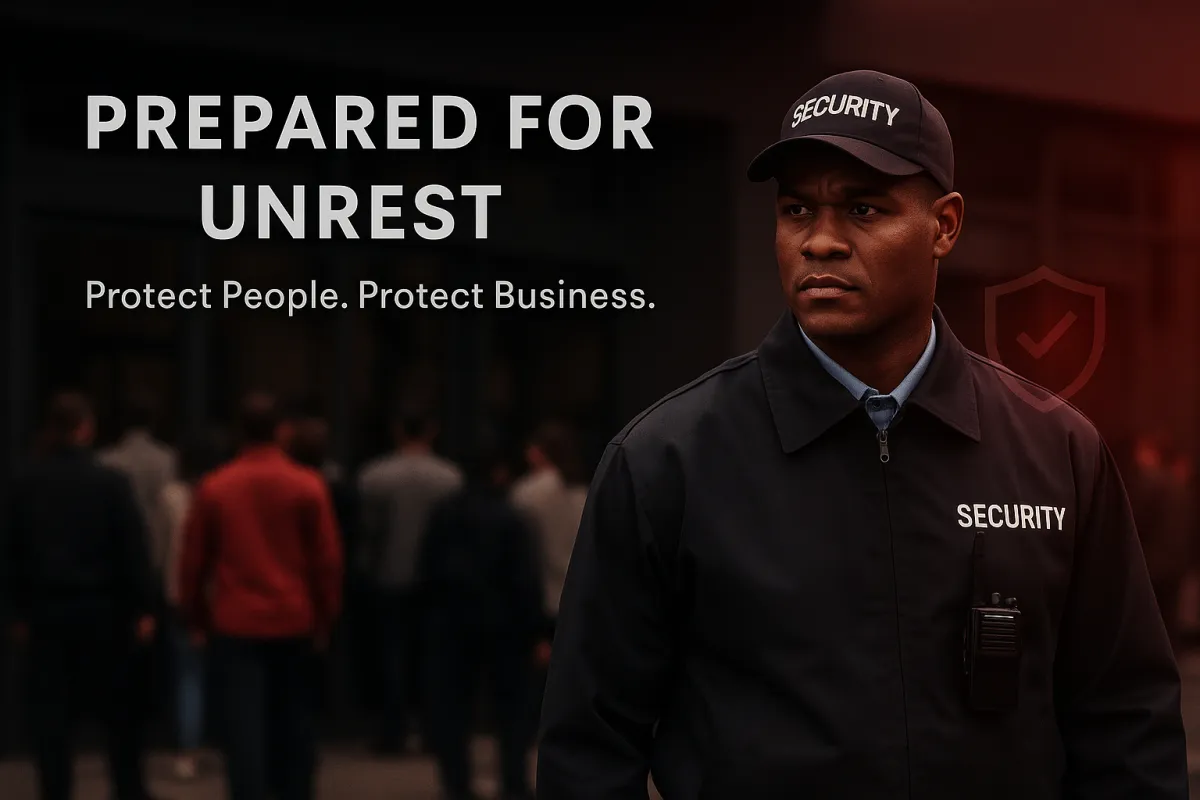
Managing Security During Strikes, Unrest, and High-Risk Events in South Africa
Managing Security During Strikes, Unrest, and High-Risk Events in South Africa
South Africa’s business environment is dynamic and often unpredictable. While growth opportunities are significant, companies must also contend with social unrest, labour strikes, and politically driven protests. For many businesses, these events can quickly escalate into security risks, threatening employees, assets, and operations. Preparing for these scenarios is not only a matter of safety — it is a matter of business continuity.
Why Businesses Must Plan for Strikes and Unrest
Labour disputes, service delivery protests, and political rallies can turn volatile with little warning. Even if your business is not directly involved, unrest in nearby areas can spill over, putting your premises, staff, and vehicles at risk.
Some of the most common risks include:
Property damage from vandalism, looting, or arson.
Violence against staff or customers if crowds turn hostile.
Disruption of supply chains due to blocked roads or hijacked vehicles.
Operational downtime, leading to financial and reputational losses.
Proactive Measures for Business Security
Risk Assessments Before Events
Businesses should work with professional security providers to evaluate vulnerabilities ahead of anticipated strikes or protests. This includes identifying weak entry points, emergency exits, and critical assets that need additional protection.Enhanced Perimeter Control
Temporary barricades, reinforced access gates, and monitored CCTV systems create layers of protection. Even simple measures, like improved lighting or physical barriers, deter potential intruders.Deploy Trained Security Personnel
PSIRA-registered officers trained in crowd control and de-escalation techniques are crucial. Their presence is both a deterrent and a safety guarantee.Emergency Evacuation Plans
Every staff member should know what to do if unrest escalates. This includes safe evacuation routes, designated assembly points, and communication protocols.Rapid Response and Backup Support
Partnering with a security provider that offers 24/7 rapid response ensures reinforcements can be dispatched immediately if threats intensify.Coordination with Authorities
Businesses should maintain strong relationships with local police and community safety groups. In high-risk situations, coordination with law enforcement helps ensure faster response and wider protection.
Case Example: Logistics Under Threat
Imagine a logistics company operating near Johannesburg during a strike. Protesters block a major route, threatening trucks carrying high-value goods. Without planning, vehicles could be hijacked, staff injured, and millions lost. With a proper plan, however, the company would have:
Alternative delivery routes mapped in advance.
Escorts for high-value cargo.
Control room monitoring to reroute drivers.
Rapid response backup in case of escalation.
This proactive strategy transforms a high-risk event into a manageable disruption.
Building Long-Term Resilience
Businesses that prepare for unrest aren’t only protecting assets — they’re investing in stability. Employees feel safer, clients trust you more, and insurers view your business as lower risk. In the long run, building resilience against unrest is as important as having fire drills or health and safety protocols.
Final Thoughts
Unrest and strikes may be part of South Africa’s reality, but they don’t have to derail your business. By combining risk assessments, trained personnel, technology, and rapid response, you can minimize risks and safeguard both your people and operations. Preparedness is not just about reacting — it’s about ensuring business continuity no matter what challenges arise.
