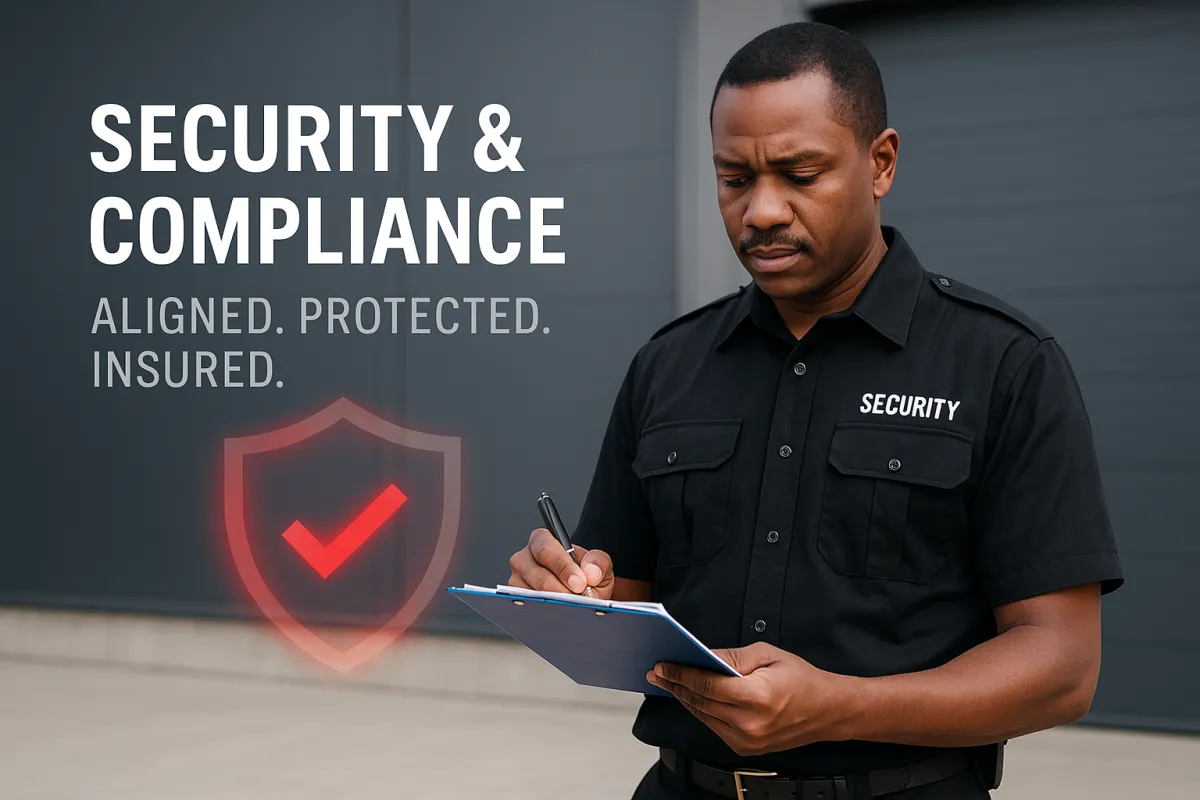
Balancing Compliance, Regulations, and Insurance in Business Security
Balancing Compliance, Regulations, and Insurance in Business Security
For South African businesses, security isn’t just about guards, gates, and alarms — it’s also about meeting legal, regulatory, and insurance requirements. Many companies underestimate how closely compliance and security are linked, but failure to align with regulations can expose you to heavy losses, rejected insurance claims, and even legal penalties.
When businesses think of compliance, they often picture paperwork or audits. In reality, compliance is what proves your business has taken reasonable and responsible steps to protect staff, customers, and assets. Combined with the right insurance policies, compliance can be the difference between bouncing back after an incident or struggling to survive.
The Compliance Landscape in South Africa
South African businesses must follow several key frameworks:
PSIRA (Private Security Industry Regulatory Authority): Ensures that your security provider is licensed and professional.
SHEQ (Safety, Health, Environment, and Quality): Covers broader workplace safety, including how security measures interact with employee well-being.
Labour Laws: Especially relevant during strikes or unrest, where worker rights must be respected while maintaining safety.
Insurance Standards: Most insurers require proof of security measures like CCTV, alarm systems, and armed response agreements.
Why Compliance Strengthens Security
Legitimacy and Trust
Clients, investors, and employees all want reassurance that your security isn’t makeshift. Compliance shows you’ve partnered with professional, accredited providers.Reduced Liability
If a break-in, theft, or accident occurs, documented compliance protects your company from being blamed for negligence.Smooth Insurance Claims
Insurers are strict about conditions. If your business isn’t using a PSIRA-registered provider or doesn’t meet basic security standards, claims may be rejected.Operational Continuity
Compliance processes (audits, training, risk assessments) help identify weaknesses early, keeping your business resilient.
The Role of Insurance in Business Security
Even the strongest security can’t prevent every incident. That’s where insurance comes in — but only if you’ve met the requirements. For example:
Property Insurance: May demand alarm-linked armed response.
Transport Insurance: Often requires GPS tracking and escorts for cargo.
General Liability Insurance: Can be voided if unregistered or untrained guards were responsible for a security failure.
Insurance companies don’t just look at your premiums — they look at your security posture. The stronger it is, the better your chances of approval and reduced costs.
Best Practices for Businesses
Partner only with PSIRA-registered providers.
Keep a record of compliance documents, including risk assessments, staff training logs, and system inspections.
Align security plans with SHEQ standards to meet both safety and insurance criteria.
Schedule regular reviews to stay ahead of changing laws and risks.
Final Thoughts
Balancing compliance, regulations, and insurance may feel like extra red tape, but in reality, it is the backbone of business security. A company that protects its people and assets in line with recognized standards is not only safer but also more trusted, insurable, and resilient. By combining professional security services with compliance and insurance alignment, South African businesses can face the future with confidence.
